25 October 2025 | IT Tips
In our earlier posts “How to Turn Employees into Your Strongest Cyber Defense” and “The Psychology Behind Phishing — Why Smart People Still Click” we explored how employees are both the greatest risk and the greatest asset in cybersecurity.
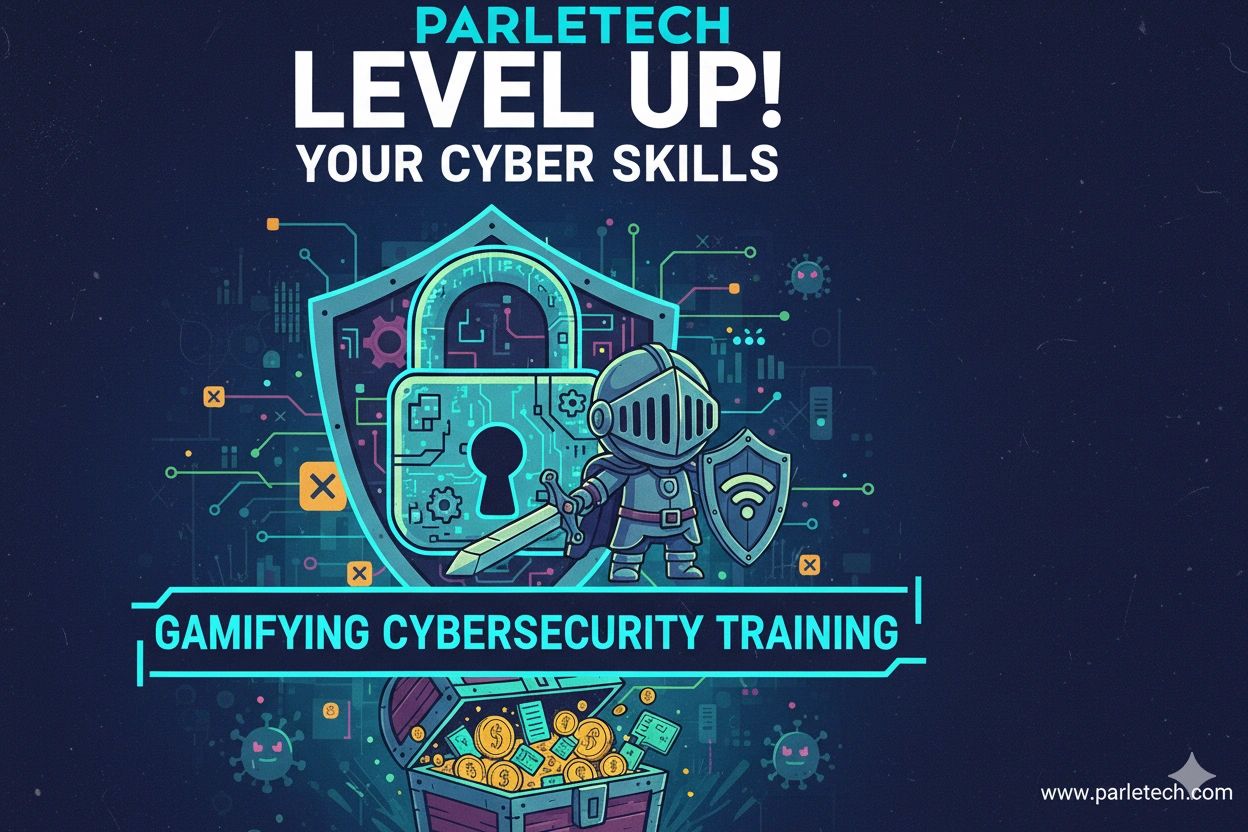
Now, we turn to a vital question: Can cybersecurity training be transformed from a checkbox exercise into something employees actually enjoy, while also improving security outcomes? The answer is: YES, but only if done intentionally. In this post, we unpack how gamification works in security awareness, review evidence of its effectiveness, and show how you can implement it in your organization.
What Is Gamified Cybersecurity Training?
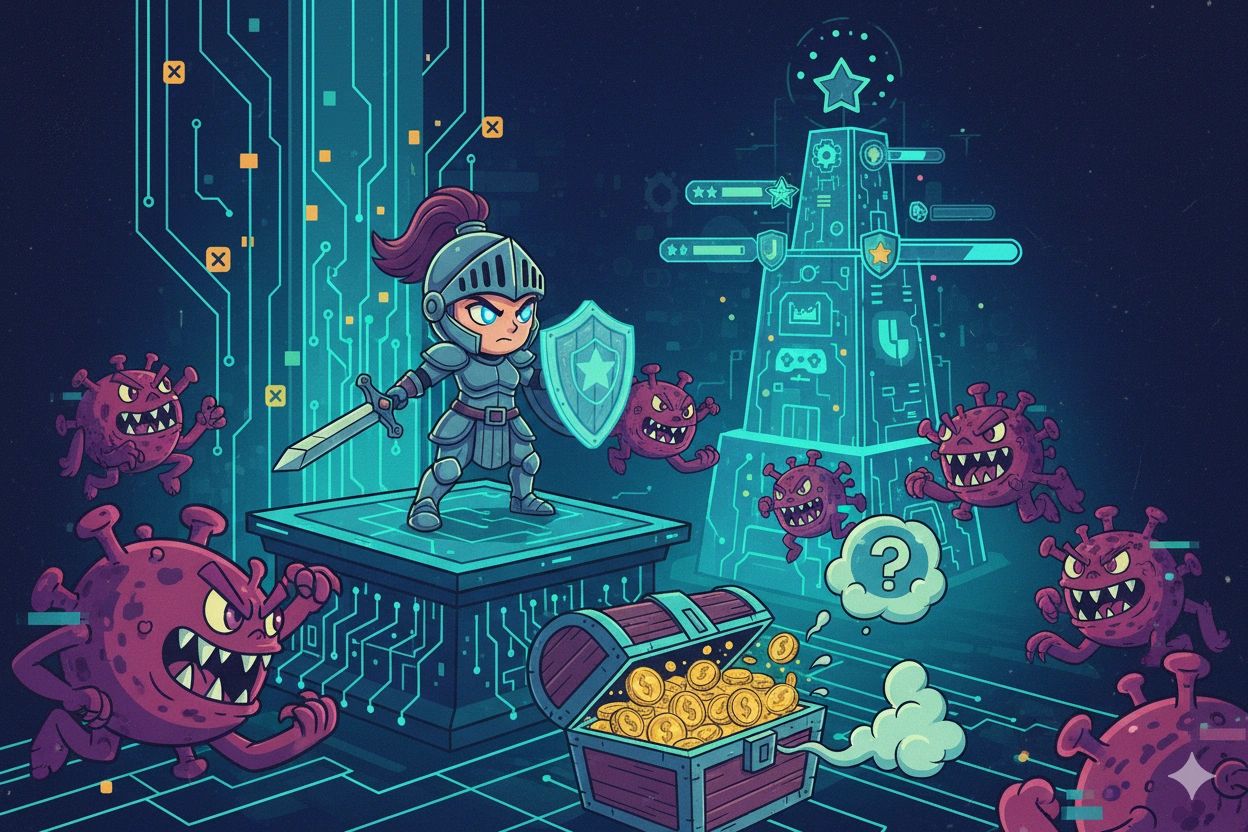
Gamification means applying game-design elements, such as points, badges, leaderboards, challenges, story-driven scenarios to non-game contexts. In a cybersecurity training context, gamification moves beyond static slide decks to interactive experiences where employees:
- compete (or collaborate) in simulated phishing or ransomware scenariosearn rewards for safe behaviour
- see progress and feedback in real time
- tackle realistic “quests” (e.g., identify suspicious email, secure a workstation) instead of just reading policy
As one source explains: gamified cybersecurity training “treats behaviour change like a design challenge using game-like elements… The aim? Not just knowledge retention… we’re talking about actual shifts in decision-making during real-world threats.”
Does It Really Work? Evidence & Statistics
Yes, there is growing evidence that gamification delivers better engagement, improved retention and stronger behaviour changes than conventional training. Here are some of the key findings:
- A survey found that 83 % of participants felt more motivated with gamified training, and 87 % reported increased productivity and engagement. KnowBe4 Blog+2CM Alliance+2
- Another research review concluded that gamification in information-security awareness programs is “one of the most effective” methods to improve user participation, knowledge and behaviour. PMC+1
- A study noted that gamification in cyber-awareness programs “can boost employee engagement by 60% and productivity by 43%.” Keepnet Labs
- An academic experiment in a ‘cyber range’ gamified environment achieved usability = 82.10% and usefulness rating 4.57/5—underscoring that users found gamified training both usable and valuable. arXiv
What this means for U.S.-based organisations: While many studies originate outside the U.S., the behavioural drivers motivation, reinforcement, and recognition are universal. For U.S. companies facing regulatory pressure, hybrid workforces, and rapidly evolving threats, gamified training offers a compelling way to raise awareness and strengthen culture. Given that human error remains a top factor in breaches, leveraging stronger engagement has a strategic impact.
Why Gamification Works: The Psychology Behind It
The effectiveness of gamification comes down to human psychology; many of the same emotional and cognitive levers we explored in Blog #2 (The Psychology Behind Phishing) apply here, but in a positive way:
- Motivation by reward & recognition: Humans respond to achievement, status and progress. Points, badges and public leaderboard placement tap into that.
- Active learning & feedback loops: Game-elements allow immediate feedback, employees test decisions, get results, iterate, which strengthens learning.
- Competition & collaboration: Friendly competition fosters involvement; team-based challenges build social commitment to safe behaviour.
- Storytelling & context: Framing tasks as “missions” or “cyber-defender quests” makes training memorable rather than just a compliance checkbox.
- Repetition & retention: As one review found, gamified scenarios help knowledge stick more than passive slide decks.
Implementation Best Practices for Organisations
If you’re ready to implement gamified cybersecurity training, here are best practices to maximise impact:
- Align the game mechanics with your security goals
Don’t gamify for fun alone. Define what behaviours you want e.g., increased phishing reporting, stronger password practices, secure remote-work habits and design challenges around them. - Keep it relevant & realistic
Use scenarios that reflect your actual threat landscape, e.g., phishing emails crafted to mimic your company’s style, role-specific simulations (finance, HR, remote workers). - Mix game elements thoughtfully
Elements like points, badges, leaderboards, time-based challenges and narrative quests all help but avoid making it feel trivial or forced. Balance fun with seriousness. ISACA+1 - Incorporate micro-learning and frequent refreshers
Instead of a single annual module, use short monthly or quarterly “missions”, phishing drills, scenario-games. Keeps engagement high and behaviours refreshed. - Measure and iterate
Track metrics beyond completion monitor click-rates in phishing simulations, reporting volume, time-to-report, and departmental performance. Use game analytics to refine your program. - Integrate with culture and leadership
Gamified training works best when leadership supports it, celebrates wins, and frames cyber awareness as a shared priority. Ties in with the human firewall culture we discussed in Blog #1.
Pitfalls to Avoid
- Don’t treat gamification as a gimmick if game elements aren’t relevant; they’ll feel forced and fail.
- Avoid one-size-fits-all: different job roles may require customised challenges.
- Don’t abandon traditional training entirely; gamification should augment, not replace.
- Recognise that long-term behaviour change takes sustained effort; some studies caution that gamification alone may not guarantee long-term results.
Gamification is not a panacea, but when designed well, it turns cybersecurity training from a compliance burden into an engaging, behaviour-driven programme. By weaving game mechanics into real threat simulations and reinforcing secure habits over time, organisations can significantly elevate their human firewall.
As we’ve built through our series, first strengthening employees as cyber defenders (Blog #1), understanding how phishing exploits human behaviour (Blog #2), now we move to training that actually sticks.
Stay tuned for the next blog in our “Human Firewall” series: “Remote Work Risks in 2025: New Rules for Securing a Hybrid Workforce.”
At Parle Technologies, we partner with you not just on tools, but on building a security-mindset across your people, culture and operations.
Share this post: