19 September 2026 | Case Studies
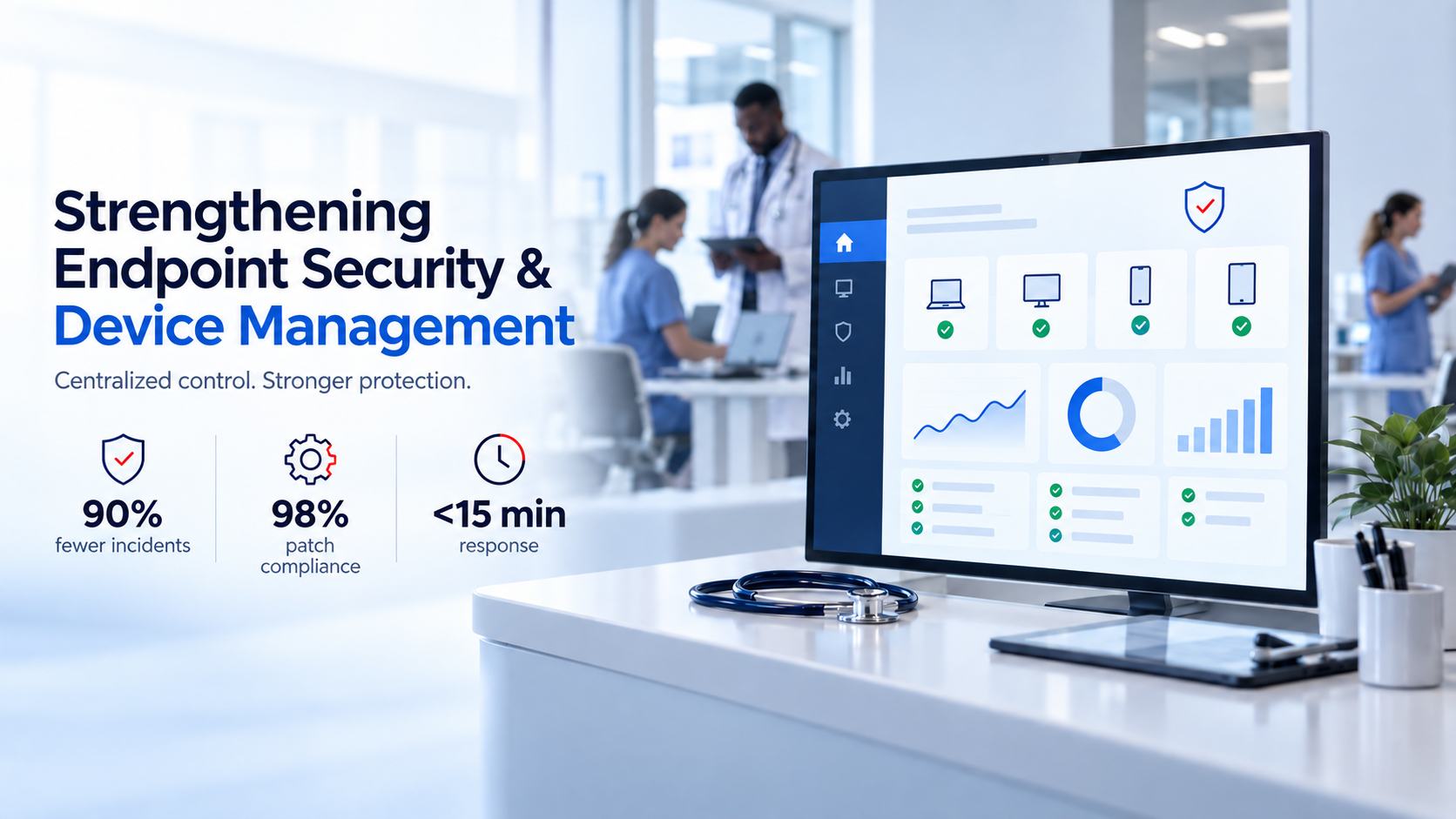
Challenge A mid-sized healthcare organization faced increasing cybersecurity threats due to the rapid expansion of remote work and the use of multiple endpoint devices. Laptops, desktops, mobile phones, and tablets were accessing sensitive patient records and corporate data without consistent security controls. The lack of centralized device management and standardized policies exposed the organization to data breaches, malware attacks, and compliance risks. Critical patient data, financial records, and operational information were at risk due to unmonitored devices and outdated security measures. The organization required a robust endpoint security and device management strategy to safeguard its digital assets and ensure regulatory compliance. Investigation A comprehensive assessment was conducted to evaluate the organization’s endpoint security posture. This included:
- Reviewing existing endpoint protection tools and policies.
- Auditing device configurations across departments.
- Identifying unauthorized and unmanaged devices.
- Evaluating patch management and update procedures.
- Assessing antivirus effectiveness and threat detection capabilities.
- Reviewing remote access and Bring Your Own Device (BYOD) policies.
- Evaluating compliance with industry standards.
- Interviewing IT administrators and key stakeholders.
Key Findings
- Endpoint security solutions were inconsistent across departments.
- Several devices lacked the latest security updates and patches.
- Unmanaged and personal devices accessed corporate resources.
- Absence of centralized monitoring and reporting.
- Weak password policies and lack of Multi-Factor Authentication (MFA).
- Limited encryption on laptops and mobile devices.
- Inadequate visibility into endpoint vulnerabilities.
- No structured incident response for endpoint-related threats.
Problems The investigation revealed several critical issues:
- Lack of Centralized Device Management: No unified platform for monitoring endpoints.
- Inconsistent Security Policies: Varied configurations across departments.
- Outdated Software and Systems: Increased exposure to vulnerabilities.
- Risk of Malware and Ransomware: Insufficient threat protection mechanisms.
- Unmanaged BYOD Devices: Elevated risk of data leakage.
- Limited Visibility: Absence of real-time monitoring and reporting.
- Weak Access Controls: Inadequate authentication mechanisms.
- Compliance Risks: Potential violations of HIPAA, GDPR, and ISO standards.
- Data Loss Risks: Lack of encryption and data protection measures.
- Inefficient Incident Response: Delayed detection and remediation.
Our Approach To mitigate these risks, a strategic and phased approach was implemented: Assessment & Planning
- Conducted a comprehensive endpoint risk analysis.
- Defined security policies and compliance requirements.
- Identified critical devices and users.
Design & Standardization
- Developed standardized endpoint security policies.
- Established device compliance baselines.
- Defined access and configuration standards.
Implementation & Integration
- Deployed a Unified Endpoint Management (UEM) solution.
- Integrated endpoint security with identity and access management systems.
Automation & Monitoring
- Enabled automated patch management and threat detection.
- Implemented centralized dashboards and real-time alerts.
Training & Documentation
- Provided user awareness training on cybersecurity best practices.
- Created detailed documentation and operational guidelines.
Solution A robust and scalable solution was deployed to safeguard organizational endpoints:
- Unified Endpoint Management (UEM): Centralized control over all devices using Microsoft Intune.
- Endpoint Detection and Response (EDR): Advanced threat protection through Microsoft Defender for Endpoint.
- Mobile Device Management (MDM): Secured and monitored mobile devices.
- Automated Patch Management: Ensured timely updates and vulnerability remediation.
- Multi-Factor Authentication (MFA): Strengthened user authentication.
- Device Encryption: Enabled BitLocker and mobile encryption for data protection.
- Conditional Access Policies: Restricted access to compliant devices only.
- Role-Based Access Control (RBAC): Limited administrative privileges.
- Application Control: Prevented unauthorized software installations.
- Data Loss Prevention (DLP): Protected sensitive organizational data.
- Remote Wipe Capability: Secured data on lost or stolen devices.
- Centralized Monitoring Dashboard: Provided real-time insights and reporting.
- Compliance Enforcement: Ensured adherence to HIPAA, GDPR, and ISO 27001 standards.
Validation To ensure reliability and effectiveness, the following validation steps were performed:
- Conducted endpoint vulnerability assessments and penetration testing.
- Verified encryption and device compliance policies.
- Tested automated patch deployment and updates.
- Simulated ransomware and phishing attacks.
- Audited access controls and authentication mechanisms.
- Monitored threat detection and incident response.
- Generated compliance and security reports.
Outcome: The organization successfully detected and mitigated threats in real time while maintaining regulatory compliance and operational continuity. Best Practices Shared with the User
- Enforce Multi-Factor Authentication (MFA) across all endpoints.
- Implement a Unified Endpoint Management (UEM) solution.
- Keep operating systems and applications up to date.
- Encrypt sensitive data at rest and in transit.
- Apply the principle of least privilege.
- Restrict access to compliant and secure devices.
- Conduct regular vulnerability assessments.
- Enable Endpoint Detection and Response (EDR).
- Monitor endpoint logs and security alerts continuously.
- Establish secure BYOD policies.
- Provide cybersecurity awareness training.
- Perform periodic security audits and compliance checks.
 Key Takeaways
- Centralized endpoint management enhances security and efficiency.
- Proactive monitoring enables faster threat detection and response.
- Automated patching reduces vulnerability risks.
- Strong access controls protect sensitive data.
- Encryption ensures data confidentiality and integrity.
- Compliance alignment mitigates legal and financial risks.
- Endpoint security is essential for modern hybrid work environments.
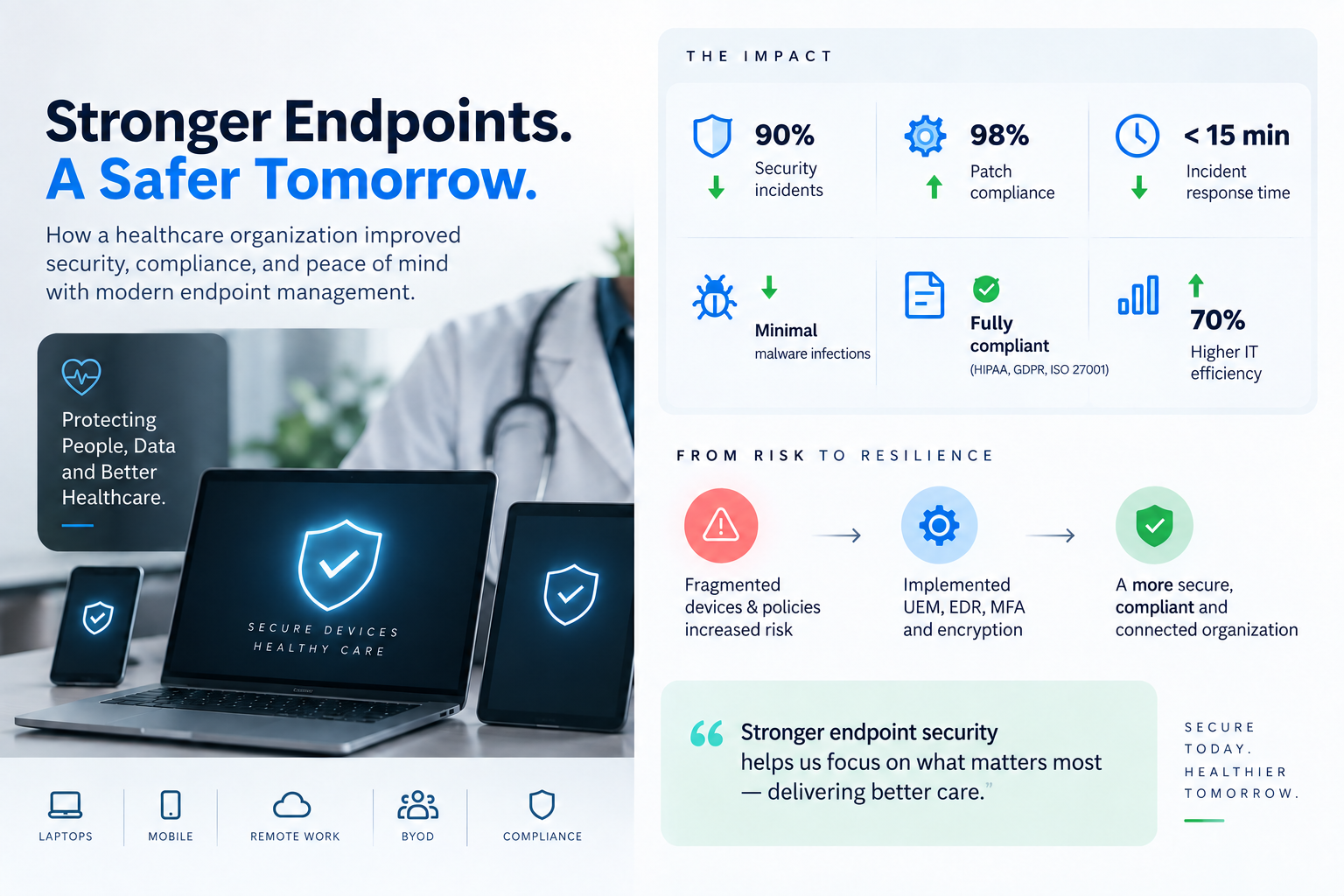
| Metric | Before Implementation | After Implementation |
|---|---|---|
| Security Incidents | Frequent | Reduced by 90% |
| Endpoint Visibility | Limited | Complete and Centralized |
| Patch Compliance Rate | 65% | 98% |
| Malware Infections | High | Minimal |
| Data Breach Risk | Significant | Greatly Reduced |
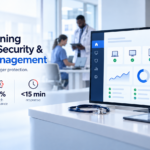
| Incident Response Time | Several Hours | Under 15 Minutes |
| Device Compliance | Inconsistent | Standardized |
| Regulatory Compliance | Partial | Fully Compliant |
| IT Operational Efficiency | Moderate | Improved by 70% |
| Downtime Due to Threats | High | Reduced by 80% |
- Implement a Zero Trust Security Architecture.
- Deploy Extended Detection and Response (XDR).
- Integrate Security Information and Event Management (SIEM) solutions.
- Adopt AI-driven threat detection tools.
- Conduct quarterly security audits and penetration testing.
- Implement Secure Access Service Edge (SASE).
- Establish an incident response and business continuity plan.
- Utilize device risk scoring and behavioral analytics.
- Enforce application whitelisting.
- Implement Privileged Access Management (PAM).
- Adopt cyber resilience and disaster recovery strategies.
- Pursue certifications such as ISO 27001 and SOC 2.
Secure your business today, with Parle Technologies!