06 October 2026 | IT Tips
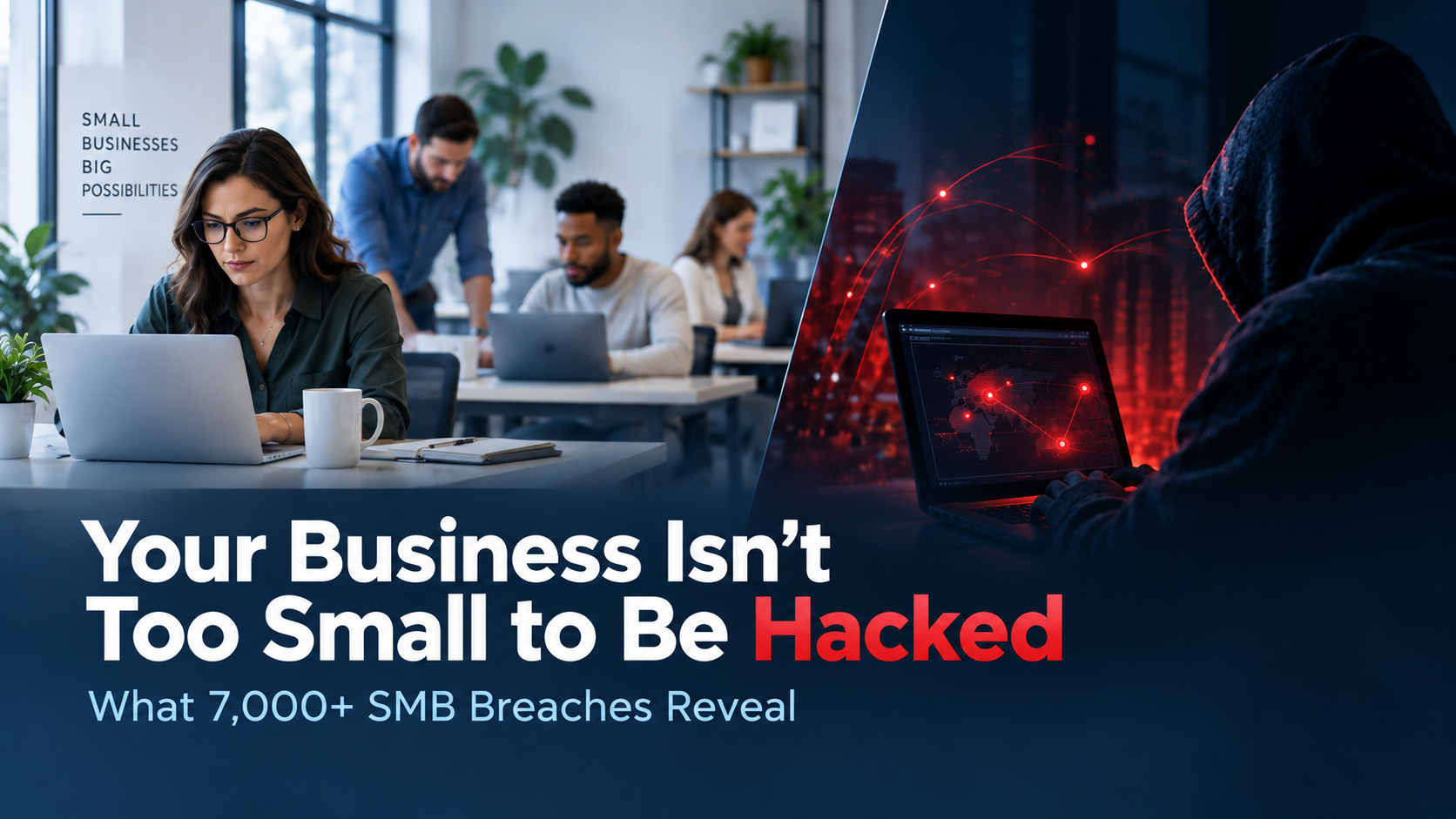
Small businesses may have fewer employees. They don’t have fewer cyber risks.
Many small and medium-sized businesses believe cyberattacks are mainly a problem for large corporations.
After all, why would a hacker target a 50-person company when thousands of larger organizations have bigger databases and bigger budgets?
The latest data tells a different story.
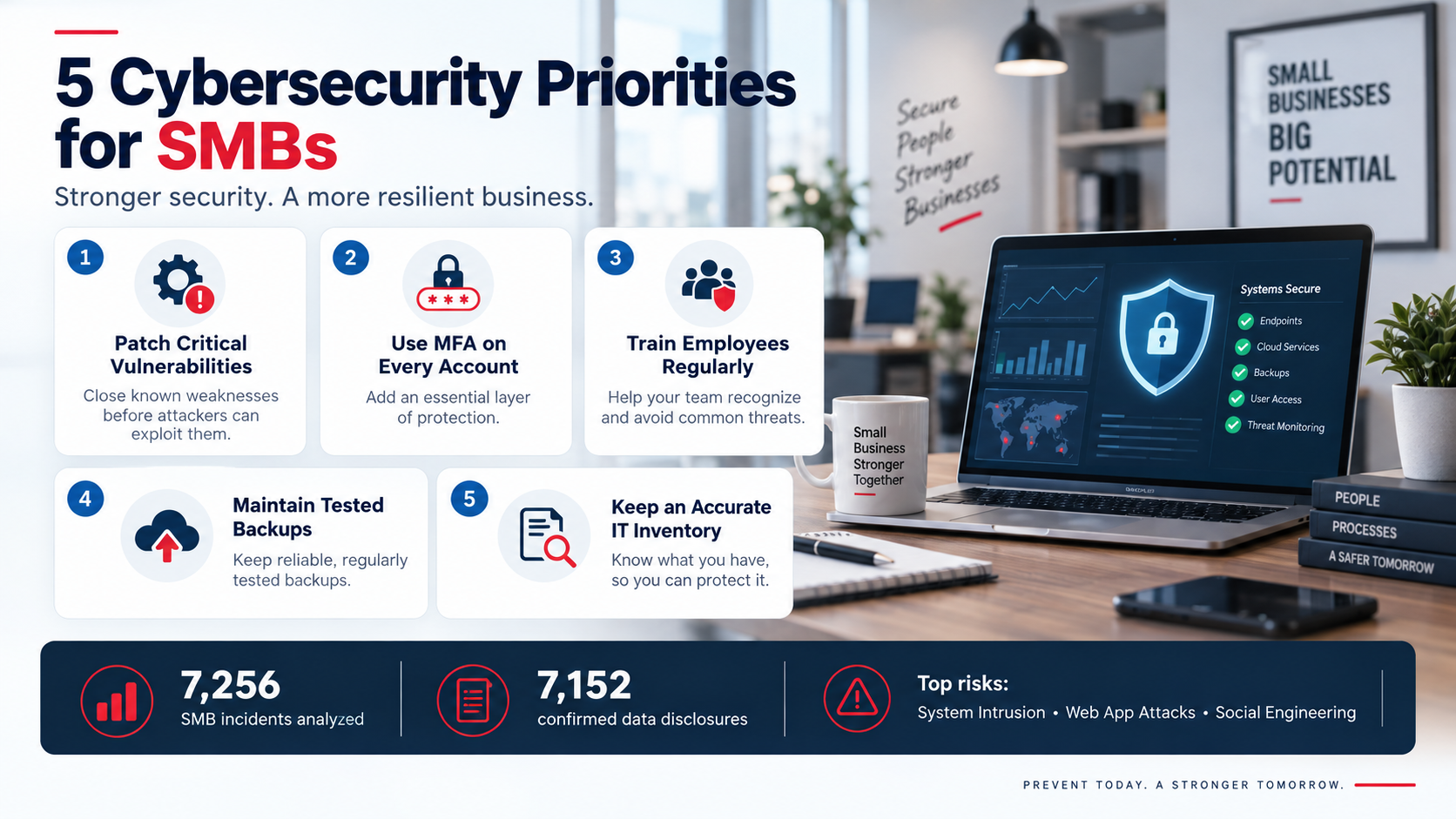
According to Verizon’s 2026 Data Breach Investigations Report, researchers analyzed 7,256 incidents involving small organizations, with 7,152 involving confirmed data disclosure. Verizon’s analysis defines small organizations as those with fewer than 1,000 employees.
The message is clear:
Being small doesn’t make a business invisible to cybercriminals.
The Numbers Behind the Risk
For SMBs, three major breach patterns dominated Verizon’s 2026 analysis:
System Intrusion
Basic Web Application Attacks
Social Engineering
Together, these represented 100% of the breaches in Verizon’s SMB-focused analysis.
And the most common initial access methods included:
26% — Exploitation of vulnerabilities
13% — Credential abuse
9% — Phishing
These aren’t futuristic attacks.
They are familiar security weaknesses that businesses deal with every day.
Why Are SMBs Being Targeted?
Cybercriminals aren’t necessarily asking:
“How big is this company?”
They’re often asking:
“How easy is it to get in?”
An outdated application, reused password, vulnerable website, exposed remote service, or successful phishing message can provide an opening.
Once attackers gain access, they may attempt to steal credentials, encrypt systems, access sensitive information, or demand a ransom.
Verizon reports that financial motivation accounted for 100% of the SMB breaches in its focused analysis.
The Ransomware Reality
SMBs are particularly exposed to ransomware because even a short disruption can have a significant operational impact.
Verizon describes small organizations as disproportionately impacted by ransomware, while noting that they face many of the same threats as larger organizations but often have fewer resources available.
For a small business, an attack can mean:
- Employees unable to work
- Customer services interrupted
- Critical systems unavailable
- Sensitive information exposed
- Unexpected recovery costs
- Lost customer confidence
And the financial impact can be significant.
Verizon’s 2026 Breach Impact Study found that, in the most extreme 2.5% of SMB cases, the financial loss associated with a breach exceeded 7% of the company’s revenue.
The Attack Surface Is Bigger Than You Think
Your business may have only 25 employees.
But your technology environment could include:
Email + laptops + cloud applications + websites + Microsoft 365 + vendors + remote access + mobile devices + SaaS platforms
Every connection creates another potential entry point.
Third parties are an important part of that picture too. Across organizations in Verizon’s 2026 DBIR, breaches involving third parties increased 60% and accounted for 48% of all breaches.
So cybersecurity isn’t only about protecting your own systems.
It’s also about understanding who has access to them.
5 Things Every SMB Should Prioritize
1. Patch Critical Vulnerabilities
Keep operating systems, applications, firewalls, websites, and other internet-facing systems updated.
2. Protect Every Account
Use strong, unique passwords and multi-factor authentication (MFA) wherever possible.
3. Train Your Employees
Phishing and social engineering target people, not just technology. Regular security awareness training can help employees recognize suspicious requests.
4. Maintain Reliable Backups
Backups should be protected, tested, and separated from the systems they are designed to recover.
5. Know Your Technology
Maintain an accurate inventory of devices, applications, users, cloud services, and vendors.
You can’t protect what you don’t know you have.
The Bottom Line
A small business doesn’t need to have thousands of employees to become a target.
The 7,000+ SMB incidents analyzed in Verizon’s 2026 DBIR demonstrate that smaller organizations face many of the same attack patterns seen across the broader threat landscape.
The goal isn’t to build an impenetrable business.
It’s to make your organization harder to compromise, faster to detect an attack, and better prepared to recover.
Because your business may be small.
Your cyber risk isn’t.
Website: www.parletech.com
If you are ready to secure and upgrade the IT Infrastructure of your business, Connect Now!