23 October 2026 | Case Studies
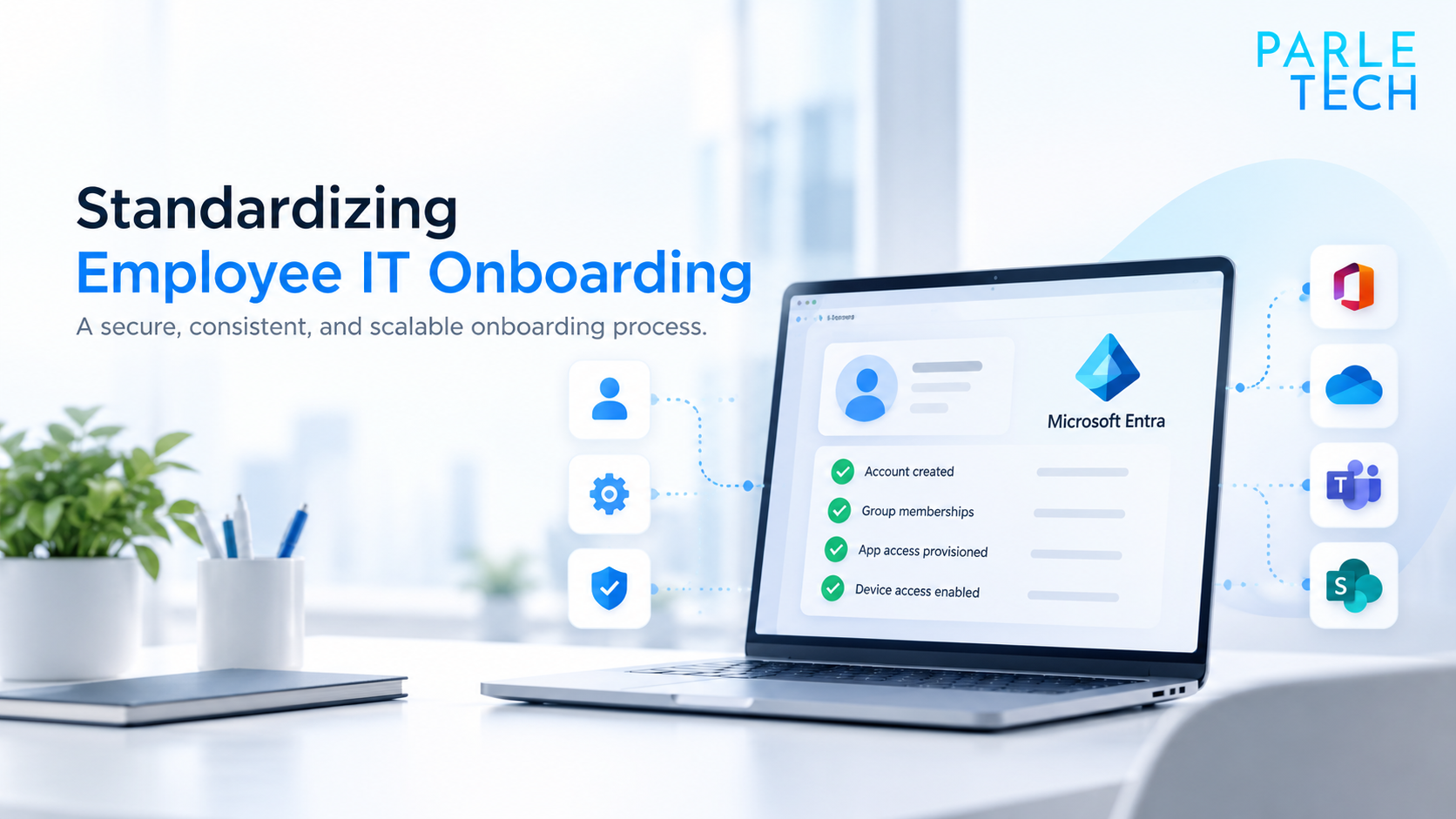
Employee onboarding begins before a new hire arrives. When account creation, device preparation, application access, and coordination depend on manual requests and follow-up, small gaps can quickly become Day-One delays.
A client needed a more consistent way to prepare new employees and reduce repetitive onboarding work while keeping IT responsible for final verification.
Parle Technologies transformed the manual process into a standardized, AI-assisted workflow, with Microsoft Entra automating repeatable identity and access tasks.
The Challenge
The existing onboarding process relied heavily on individual requests and manual communication between HR, managers, and IT. Technology needs could vary by employee, and preparation sometimes happened too close to the employee’s start date.
The review identified several recurring gaps:
- Account creation could be delayed.
- Laptop preparation sometimes happened at the last minute.
- Required application or system access could be missed.
- Employee configurations were not always consistent.
- Too much of the process depended on manual coordination and follow-up.
Combined, these gaps increased the possibility of avoidable first-day IT delays. The organization needed a process that would standardize onboarding information, automate repeatable work, and still allow IT to verify completion and exceptions before Day One.
Our Approach
Parle Technologies designed a six-step onboarding workflow that creates clearer handoffs while using AI and Microsoft Entra to reduce repetitive manual steps.
- Structured Onboarding Request
Employee, role, device, and access details are collected in one consistent onboarding request. This gives IT a single starting point instead of relying on fragmented requests or follow-up messages.
- AI-Assisted Request Processing
AI is used to structure the onboarding request, identify missing information, and align the details with the onboarding checklist. This helps standardize the information before provisioning begins.
- Role-Based Requirements
Approved applications, permissions, and access requirements are defined according to the employee’s role. This creates a more consistent basis for provisioning.
- Microsoft Entra Automation
Microsoft Entra is used to automate repeatable identity and access provisioning based on the approved requirements. This moves routine account and access tasks away from manual follow-up.
- Device and Application Setup
Required devices and software are prepared in parallel with identity and access provisioning so that multiple onboarding activities can progress together before the employee starts.
- IT Readiness Check
IT performs a final readiness check to confirm completion, resolve any exceptions, and verify that the employee is ready before Day One.
Before Day One
The improved process moves onboarding through a controlled sequence:
- Collect the employee’s details and role.
- Use AI to structure and validate the request.
- Map approved role-based access requirements.
- Use Microsoft Entra to automate repeatable identity and access tasks.
- Prepare the required device and applications and resolve exceptions.
- Complete an IT readiness check before the employee arrives.
The key shift is that AI handles structured intake, Microsoft Entra automates repeatable identity and access work, and IT remains responsible for verifying completion and exceptions.
The Result
The organization gained a more organized, automated, and repeatable onboarding experience.
The improved process helped:
- Reduce repetitive manual follow-up.
- Create more consistent identity and access provisioning.
- Clarify ownership and handoffs during onboarding.
- Standardize role-based access requirements.
- Prepare devices, software, and access earlier in the process.
- Keep a final IT verification step before Day One.
Instead of depending on manual reminders for every step, repeatable onboarding tasks can now be handled through a structured workflow while IT retains control of final readiness.
What We Learned
- A single structured onboarding request creates a clearer starting point for HR, managers, and IT.
- AI can help process and standardize onboarding information before provisioning begins.
- Role-based access requirements should be defined before accounts and permissions are provisioned.
- Microsoft Entra can automate repeatable identity and access tasks based on approved requirements.
- Automation works best when IT still verifies devices, exceptions, and final readiness before the employee starts.
A better Day One starts before Day One. By automating the repeatable work and keeping IT verification where it matters, Parle Technologies helped create a more consistent onboarding process designed to have employees ready to work when they arrive.
“Automate the repeatable work. Verify what matters. Start Day One ready.”
Secure your business today, with Parle Technologies!