In today’s digital world, cyber threats are evolving faster than ever and one of the most dangerous among them is ransomware. From small businesses to large enterprises, no one is immune. Understanding ransomware and knowing how to prevent it is critical for protecting your business data and operations.
What is Ransomware?
Ransomware is a type of malicious software (malware) that blocks access to your system or encrypts your data. Cybercriminals then demand a payment (ransom) to restore access.
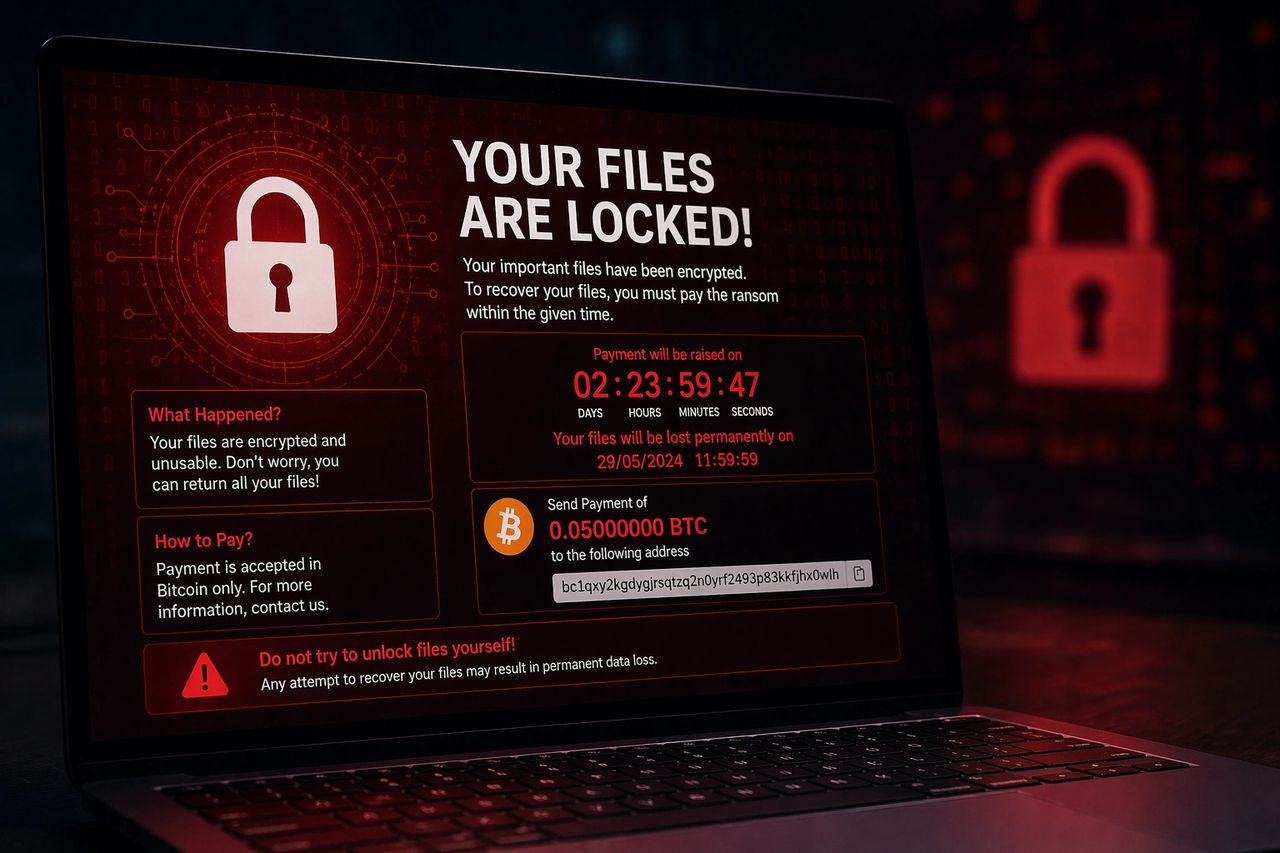
Once infected, users may see a message such as:
“Your files are locked. Pay to regain access.”
Attackers often demand payment in cryptocurrency, making it difficult to trace them.
“The U.S. is the #1 target globally, accounting for ~50% of ransomware attacks worldwide “
How Does Ransomware Spread?
Ransomware can enter your system through multiple channels:
Phishing emails with malicious links or attachments
Unsecured downloads from unknown or unsafe websites
For many small businesses, a single attack can be devastating.
How to Prevent Ransomware
Prevention is always better than recovery. Here are the most effective ways to protect your business:
1. Enable Multi-Factor Authentication (MFA)
Adds an extra layer of security, making unauthorized access significantly harder.
2. Regular Data Backups
Maintain secure, offline backups to ensure recovery without paying ransom.
3. Keep Software Updated
Regular updates fix vulnerabilities that attackers exploit.
4. Employee Awareness Training
Educate employees to identify phishing emails, avoid suspicious links, and follow security protocols.
5. Use Strong Password Policies
Encourage complex passwords and regular updates. Avoid password reuse.
6. Install Reliable Security Software
Use antivirus, firewalls, and endpoint protection tools to detect and block threats early.
7. Restrict Access Controls
Limit access to sensitive data to authorized users only.
Should You Pay the Ransom?
Experts strongly advise against paying the ransom because:
There is no guarantee your data will be restored
It encourages further cybercriminal activity
You may become a repeat target
How ParleTech Can Help
At ParleTech, we help businesses stay protected with:
Advanced cybersecurity solutions
Threat detection and prevention
Data protection strategies
Employee awareness programs
We ensure your business remains secure, compliant, and resilient against cyber threats.
Final Thoughts
Ransomware is not just an IT issue, it is a business risk. Being proactive with cybersecurity measures can save your company from financial loss, data breaches, and operational downtime.
Businesses that fail to adapt risk becoming the next headline.
Take action today. Secure your business before it is too late.